Hugo Reiss
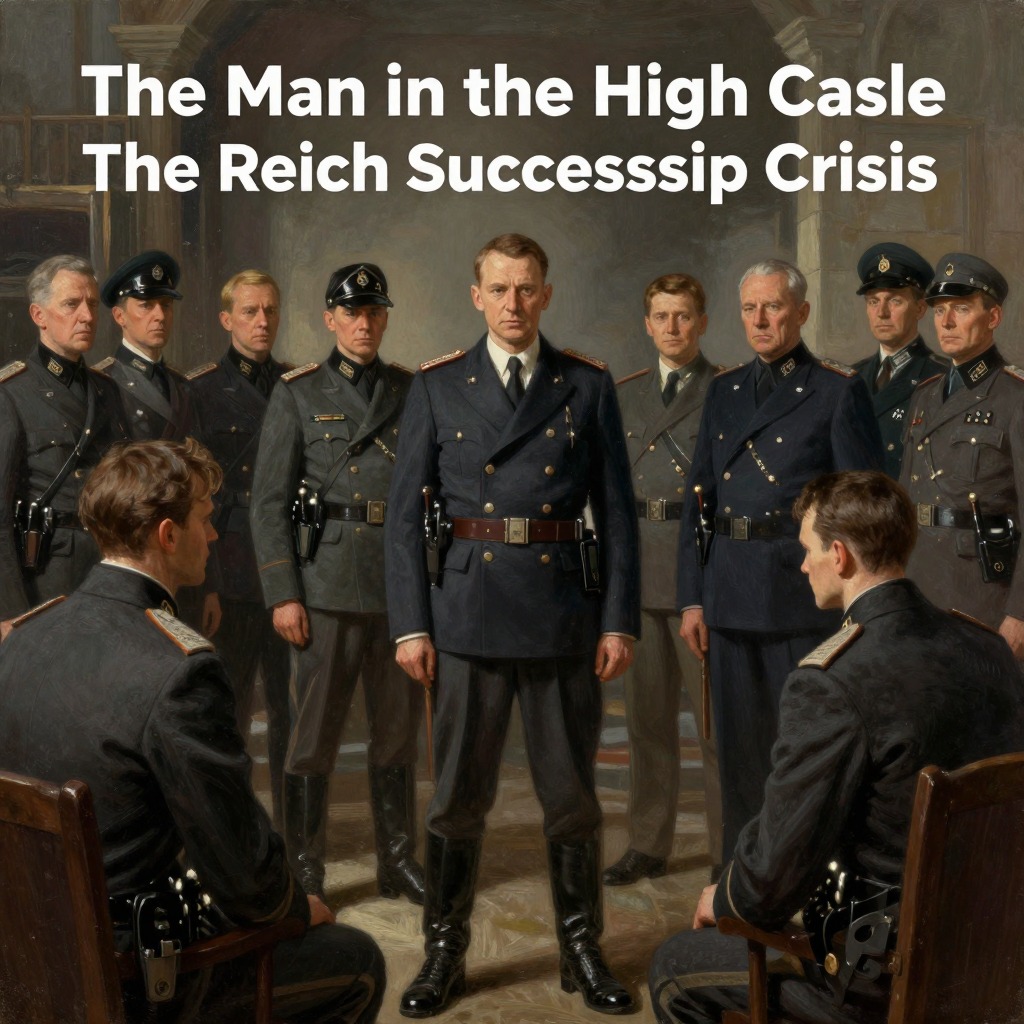
Hugo Reiss, the Reichs Consul in San Francisco, is a career diplomat whose life is defined by the tension between his official duties and the brutal, irrational machinery of the Nazi state he represents. A man of routine and bureaucratic caution, he is forced to navigate the chaotic power struggle following Martin Bormann's death, and his encounters with the SD chief Bruno Kreuz vom Meere and the Japanese official Nobusuke Tagomi reveal a character torn between duty, resentment, and a dawning horror at the regime he serves.
Identity and Background
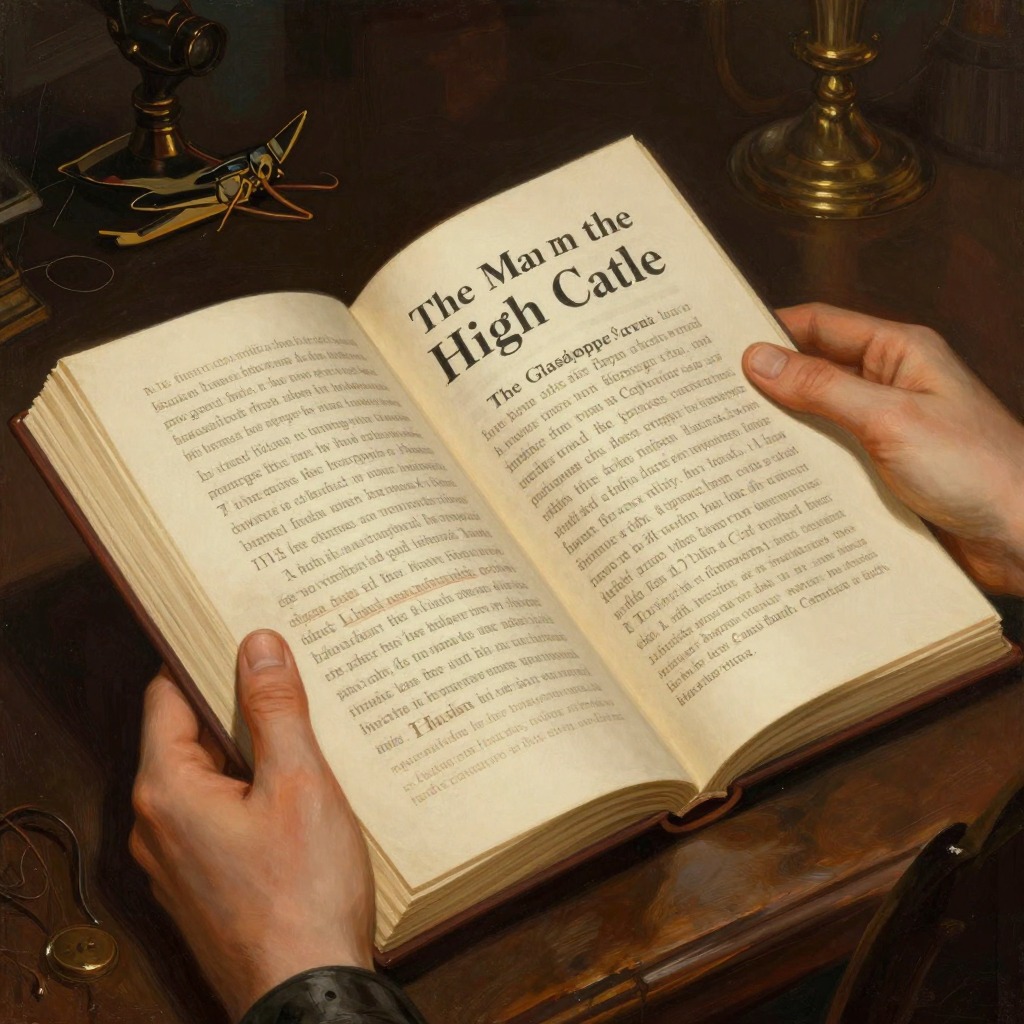
Freiherr Hugo Reiss is the Reichs Consul in San Francisco, a position that places him at the center of German diplomatic activity on the Pacific Coast. He holds an honorary commission in the SS with the rank of major, a title bestowed upon him several years prior, which he recognizes as a deliberate policy from Berlin to make him technically subordinate to the local SD chief. This arrangement chafes him deeply. He is a man of refined habits, reading the Frankfurter Zeitung flown in by Lufthansa each morning, smoking Egyptian Simon Arzt cigarettes, and enjoying a breakfast of rolls, scrambled eggs, and sausage. His office is a space of controlled order, where he manages the routine business of greeting German sailors, answering coded radiograms, and composing messages of condolence. He is also a secret reader of the banned novel The Grasshopper Lies Heavy, a fact that reveals a private, intellectual life at odds with his public role.
Conflict with the SD and the Bormann Crisis
Reiss's primary antagonist is Bruno Kreuz vom Meere, the chief of the Sicherheitsdienst in the PSA area. Their jurisdiction overlaps in countless matters, a deliberate policy from Berlin, and Reiss resents the SD's heavy-handed methods and their tendency to go over his head. When Kreuz vom Meere arrives at the consulate to report that they have located the Abwehr agent Rudolf Wegener, Reiss is forced to cooperate. The SD chief outlines a plan to snatch Wegener from his meeting with the Japanese, using a Kommando squad disguised as businessmen. Reiss listens with a mixture of resignation and contempt, inwardly cringing at his own choice of words when he flatters the SD chief. The situation escalates when Reiss receives a direct telephone call from the new Reichs Chancellor, Dr. Goebbels, who orders him to cooperate fully with the police. This call, which bypasses the normal chain of command, fills Reiss with a sense of being hemmed in and powerless. He contemplates subtle acts of sabotage, such as dropping a hint to the Japanese or needling them into outrage, but the lack of time prevents him from acting.
The Encounter with Tagomi and a Crisis of Conscience
Reiss's most significant confrontation occurs when he visits the Nippon Times Building to meet with Nobusuke Tagomi. The meeting is a direct result of the failed SD raid, and Reiss attempts to smooth over the incident, calling it a matter of insane hoodlums with no connection to the Reich. He extends his hand for a gentleman's agreement to drop the matter, but Tagomi refuses to accept this facile resolution. Tagomi, still shaken from having killed two SD men, delivers a blistering indictment of the Reich, declaring that it is about to descend into greater vileness than ever and that a bloodbath is coming beyond all compare. He accuses Reiss of striving for egotistic gain while the world burns. Reiss is nonplused, and when Tagomi begins to suffer a heart attack, the consul is left standing in the corridor, having been dismissed with the crude epithet "chicken shit." This encounter shatters Reiss's professional composure, forcing him to confront the moral horror he has been trying to manage through routine.
Narrative Role and Thematic Significance
Hugo Reiss serves as a portrait of the "good German" within the Nazi apparatus—a man who is not a fanatic but a functionary, whose very competence and desire for order make him complicit in atrocity. His secret reading of The Grasshopper Lies Heavy reveals a capacity for empathy and imagination that he cannot reconcile with his duties. He is moved by the novel's depiction of a defeated Germany, finding it somehow grander than the actual world of German hegemony, and he briefly contemplates ordering the assassination of the author, Hawthorne Abendsen, before burning the notation in fear. His final scene, in which he is verbally and morally defeated by Tagomi, marks a point of no return. He is left with nothing but the hollow forms of diplomacy, a man who has seen the truth but lacks the courage to act on it, embodying the novel's theme of the moral paralysis that afflicts those who serve an evil system without fully believing in it.